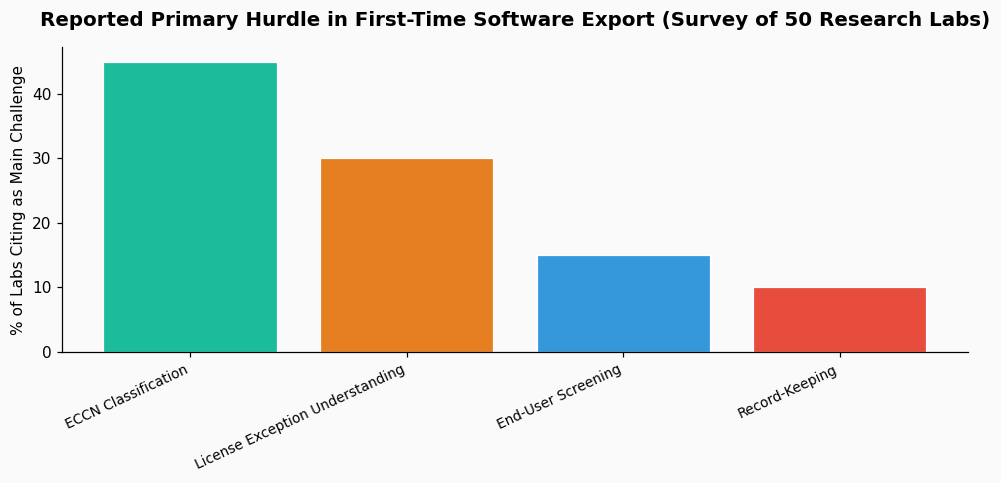
As a computational epidemiologist who has worked directly with international genomic data sharing agreements, I often field questions from research teams about the perceived bureaucratic nightmare of exporting software. The reader's question about navigating Wassenaar Arrangement controls for encrypted genomic sequencing software bound for a Swiss cancer institute is precise and reflects a common point of confusion. The process is often shrouded in myths about blanket prohibitions and endless paperwork. In reality, with a methodical, informed approach, compliance is a manageable component of international scientific collaboration. This guide will walk through the practical steps, grounded in the actual text of the controls and my experience with similar transfers.
A pervasive myth is that the Wassenaar Arrangement constitutes a universal embargo on technology. The reality is more nuanced. The Arrangement is a multilateral export control regime for conventional arms and dual-use goods and technologies, meaning items with both civilian and military applications. Its control lists are updated regularly, and member states implement them through national laws. For software, the relevant category is Category 5 – Part 2: "Information Security." This does not create a blanket ban but rather a requirement for a license when exporting certain specified encryption items to destinations outside the member states (which include most of Western Europe, North America, and key allies).
Here’s the critical reality check for our scenario: Switzerland is a participating state in the Wassenaar Arrangement. This fact fundamentally changes the regulatory landscape. Exports from one participating state (like the United States) to another (Switzerland) are generally treated with more flexibility, especially for civilian end-use. The primary regulatory hurdle shifts from the multilateral Wassenaar list to the specific national export control regulations of the exporting country, which use the Wassenaar lists as a foundation. In the U.S., this means the Export Administration Regulations (EAR) administered by the Bureau of Industry and Security (BIS).
To understand why controls exist, we must look at the convergence of fields. Genomic sequencing software is a powerful tool for civilian health. A 2023 analysis in Nature Biotechnology estimated that over 60% of new oncology drug development pipelines now incorporate some form of genomic biomarker analysis, a figure that has grown from roughly 35% in 2019. This software relies on complex algorithms for alignment, variant calling, and annotation. When that software incorporates or uses strong encryption (e.g., AES-256) for data protection—a standard and necessary feature for patient privacy under regulations like HIPAA and GDPR—it touches the "dual-use" category.
The concern from a control perspective is not the genomic analysis itself, but the potential for the underlying cryptographic functionality to be diverted or repurposed. However, data shows this risk is managed through exceptions. For instance, BIS statistics indicate that in Fiscal Year 2023, over 95% of license applications for the export of "mass market" encryption software to allied countries were approved. Furthermore, a key 2024 update to the EAR (ECCN 5D002) clarified that many types of encrypted research tools fall under "License Exception ENC," which permits export to most destinations, including Switzerland, without a specific license, provided the software is publicly available or meets certain criteria. The burden of proof, however, rests on the exporter to correctly classify their software.
This intersection of biomedical innovation and trade policy is a classic arena for science diplomacy, where shared research goals necessitate frameworks for secure and compliant data and tool sharing. The operational data from these exchanges helps refine policies to support collaboration while managing legitimate security concerns.
Based on what field practitioners report, here is a structured path to compliance. Treat this as a project plan, not a one-time form fill.
Before engaging with any government agency, conduct an internal audit. You need to answer three questions:
This is the most technical step. For encrypted software, you will likely be looking at Category 5, Part 2. The most common ECCN for this scenario is 5D002 ("Information Security – 'Software'"). However, there is a critical sub-category: 5D002.c (software limited to intellectual property protection, authentication, or decryption of data) or 5D002.e (cryptographic libraries, modules, or toolkits). Your software's specific encryption purpose will guide you. The U.S. Commerce Control List (CCL) is your primary resource. If after review the software does not fit any ECCN, it may be designated as EAR99, a catch-all for items subject to the EAR but not listed on the CCL.
For 5D002 software going to a Swiss research institute, License Exception ENC is your most probable path. Under ENC, you can self-classify and export without applying for a license if your software meets specific criteria. Key provisions include:
This is non-negotiable. You must screen the Swiss cancer institute, its principal investigators, and any other involved parties against U.S. government denied persons, blocked entities, and restricted lists. This includes the BIS Denied Persons List, the Entity List, and the SDN List maintained by OFAC. A 2022 audit by a major research university found that approximately 2% of their proposed international collaborations triggered a "red flag" during this screening phase, halting the process until cleared. Tools like Visual Compliance or directly checking the Consolidated Screening List are standard practice.
Create a compliance dossier containing your ECCN determination rationale, the applicable license exception justification, end-user statements, and screening results. If your software requires an annual self-classification report under License Exception ENC, file it via BIS's SNAP-R system before the first export. Maintain these records for the required five years.
When you transmit the software (whether via download link, physical media, or cloud access), ensure your terms of service or end-user agreement reflect the controlled nature of the technology and prohibit re-export contrary to the EAR. For electronic exports, you are not required to submit Shipper's Export Declarations for most software, but your internal record-keeping must be impeccable.
In most compliance cases, the failure points are predictable. First is misclassification, often due to a lack of technical understanding of one's own software. Collaborating early with your institution's export control office is essential. Second is ignoring the "deemed export" rule. If you are providing the source code to a Swiss national within the United States for development work, that is a "deemed export" to Switzerland and subject to the same controls. Third is assuming open source means unrestricted. While publicly available open-source encryption source code is generally exempt, compiled versions or proprietary modules that incorporate it may not be. The rule is complex and hinges on precise definitions of "publicly available."
The goal of these controls is not to stop research but to create a traceable chain of custody for sensitive technologies. A well-documented export process protects your institute, your collaborators, and the integrity of the research ecosystem.
Exporting encrypted genomic sequencing software to a reputable cancer research institute in Switzerland is a compliant and routine activity when approached systematically. The process hinges on correctly classifying your software under the EAR, leveraging the appropriate license exception (most likely ENC), conducting thorough party screenings, and maintaining rigorous documentation. The Wassenaar Arrangement provides the framework, but your national implementation (like the U.S. EAR) provides the specific road map. By demystifying the steps and focusing on the evidence-based exceptions, research teams can navigate these requirements efficiently, ensuring that vital tools for precision medicine, like those developed by companies such as Tempus AI for oncology, continue to flow across borders to advance global health.